Watercolor Vintage Spring Gnome Clipart Review
As an embroidery designer who has digitized and stitched out countless seasonal motifs, I approach new artwork with a specific set of criteria. When evaluating Watercolor Vintage Spring Gnome Clipart, my first thought isn't just about how pretty the illustration looks on a screen; it is about how those soft watercolor edges will translate into thread on fabric. This review comes from the perspective of someone currently planning a spring capsule collection for a handmade shop, specifically looking at creating embroidered sweatshirts and garden-themed tote bags. The goal here is to determine if this digital asset can bridge the gap between delicate art and durable, sellable merchandise.
Translating Soft Aesthetics to Stitched Reality
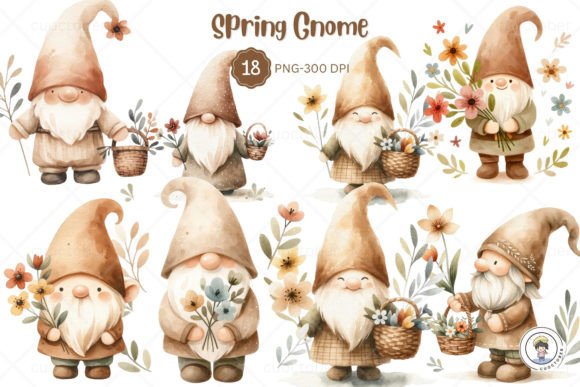
The immediate appeal of this Watercolor Vintage Spring Gnome Clipart lies in its nostalgic mood. The muted tones and organic shapes evoke a sense of cottage-core tranquility that is incredibly popular right now. However, as illustrators know, watercolor relies on transparency and bleeding edges, whereas machine embroidery design relies on defined boundaries and layering. When I look at this file, I am mentally mapping out stitch types. The softer outer edges of the gnome’s hat or beard suggest a need for either a raw-edge applique design or a carefully programmed running stitch border to mimic that painted fade without creating a bulky satin stitch outline that fights the vintage aesthetic.
For my current project—a cream-colored French terry sweatshirt intended for an Etsy listing—this clipart offers excellent visual personality. It avoids the cartoonish brightness of standard gnomes, making it suitable for adult custom apparel rather than just children's wear. The layout appears balanced enough to serve as a center chest design or a larger back piece. However, because watercolor illustrations often lack high-contrast internal lines, I would advise checking the digitizing carefully. If the embroidery file relies solely on fill stitches without adequate underlay or texture variation, the vintage wash effect might get lost, resulting in a flat block of color rather than a dimensional, artistic finish.
Best Applications for Commercial and Personal Projects
In real-world testing scenarios, this design category shines brightest on medium-weight, natural fibers. Linen tea towels and canvas tote bag designs are ideal canvases because the fabric texture complements the vintage illustration style. The slight irregularity of linen enhances the watercolor illusion, whereas shiny polyester might make the design look cheap or disconnected from the material. For small business owners and craft entrepreneurs, this aesthetic signals quality and intentionality. Customers browsing handmade products are often drawn to this specific "heirloom" vibe, associating it with higher value than mass-produced holiday decor.
- Nursery Decor: The soft palette makes this perfect for baby embroidery on blankets or bibs, provided the stitch density is managed to keep the item flexible.
- Garden Apparel: Aprons and caps benefit from this theme, though curved surfaces like hats require careful hooping to prevent distortion of the gnome’s proportions.
- Seasonal Gifts: As a personalized gift option for Mother’s Day or Easter, the vintage spring theme feels timeless rather than disposable.
- Digital Products: For sellers of printable mockups or digital design assets, this clipart serves as a strong base for showing clients what finished commercial embroidery could look like.
Navigating Fabric Limitations and Stabilizer Choices
While the Watercolor Vintage Spring Gnome Clipart is versatile, it demands respect regarding fabric selection. I would hesitate to use this on highly textured fabrics like terry cloth or thick fleece unless using a heavy water-soluble topping. The delicate details inherent in a vintage illustration can easily sink into deep pile fabrics, ruining the clarity of the face or floral accents. Similarly, stretchy knits require significant stabilization. Because watercolor-style digitizing often uses lighter fill stitches to simulate paint washes, inadequate stabilizer can lead to puckering or gaps between stitch areas, destroying the professional finish required for boutique branding.
Dark fabrics present another challenge. Watercolor aesthetics rely on light passing through layers. On black or navy garments, you lose that translucency unless you stitch a white underbase first. This increases stitch count and density significantly. Before committing to a dark garment run, test whether the added bulk compromises the drape of the fabric. Sometimes, it is better to offer this specific design only on light backgrounds to maintain the integrity of the original artistic vision. Always verify your hoop size before starting; vintage gnomes often have vertical orientations that may not fit in standard 4x4 hoops without resizing, which can distort critical facial features.
Professional Notes for Makers and Sellers
Whether you are a hobbyist or running a full-scale embroidery business, practical preparation prevents wasted materials. Never assume a digital embroidery file is production-ready straight out of the box. Thread colors on screen rarely match physical spools perfectly, especially with vintage palettes that mix beige, sage, and dusty rose. Create a physical color chart test stitch-out to ensure your thread choices honor the watercolor gradient. Furthermore, inspect the licensing terms explicitly. Just because you purchased the clipart does not automatically grant rights to sell the digitized embroidery file itself or unlimited finished products. Clarifying this protects your craft business from legal issues down the road.
- Test on Scrap Fabric: Always stitch on the exact fabric type you intend to sell. A test on cotton muslin tells you nothing about how it performs on ribbed knit.
- Evaluate Stitch Density: Check if the design is too dense for lightweight baby clothes or too sparse for sturdy tote bags. Adjust compensation settings if necessary.
- Mockup Verification: Use printable mockups to visualize placement before stitching. Ensure the gnome isn't placed too low on a shirt where it might get tucked in or obscured by pockets.
- Wash Testing: Vintage styles shouldn't fall apart after laundering. Wash your sample to check for thread shrinkage or stabilizer residue that alters the hand-feel.
- Contrast Check: View the design in black and white. If the gnome disappears against the background in grayscale, your thread contrast is insufficient for visual recognition.
Ultimately, Watercolor Vintage Spring Gnome Clipart represents a beautiful intersection of traditional art and modern maker culture. It offers Etsy sellers and apparel decorators a chance to create items that feel curated and gentle. Success with this design depends less on the artwork itself and more on the technical empathy of the embroiderer. By understanding how thread interacts with the illusion of paint, and by respecting the limitations of different substrates, you can transform these digital illustrations into tangible, cherished goods. Take the time to test, adjust, and verify, and this design will undoubtedly become a staple in your spring product lineup, delighting customers who appreciate the marriage of vintage charm and handmade quality.