Watercolor Trains Clipart: An Embroidery Review
As a designer who spends just as much time behind an embroidery machine as I do at a computer screen, I approach digital assets with a specific question: will this actually stitch out well? When evaluating Watercolor Trains Clipart for real-world application, my focus shifts from pure aesthetics to structural integrity and commercial viability. These illustrations possess a soft, nostalgic charm that is currently dominating the nursery and children’s apparel market, but translating watercolor gradients into thread requires careful consideration. This review breaks down how these design assets perform when moved from a digital folder to a tangible, stitched product.
First Impressions and Visual Translation
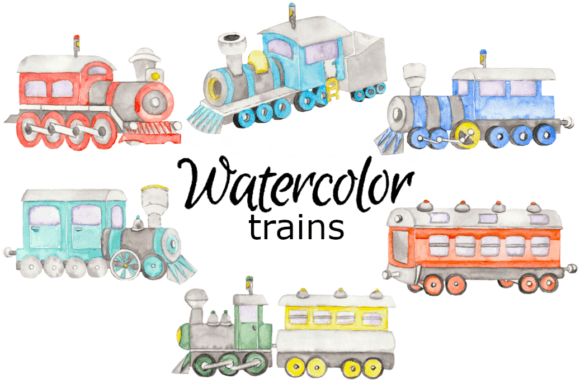
Upon opening the Watercolor Trains Clipart files, the immediate appeal is the gentle color blending and organic edges characteristic of hand-painted styles. For an Etsy seller or boutique owner, this aesthetic signals "handmade" and "premium" rather than mass-produced. However, as an embroiderer, I am immediately looking at how those soft edges will translate into stitches. Watercolor art often lacks the hard outlines that make digitizing straightforward. The mood is undeniably sweet and vintage, making it ideal for baby embroidery projects, but the lack of defined borders means the digitizer must have used complex shading techniques or applique methods to maintain shape definition.
The visual personality of these trains feels approachable and gender-neutral, which increases their versatility for a craft business. They avoid the overly primary colors of traditional train graphics, allowing them to fit seamlessly into modern boho nurseries or minimalist custom apparel. As Illustrations, they are beautiful; as potential embroidery, they demand respect for the medium's limitations regarding gradient reproduction.
Real-World Application: The Custom Tote Bag Test
To truly judge this asset, I mentally placed it on a recent client project: a personalized canvas tote bag intended as a gift for a new mother. Canvas is a textured fabric that can swallow fine details. In this scenario, Watercolor Trains Clipart serves as the centerpiece. Because tote bags are durable goods, the design needs to hold up to wear without looking muddy.
If utilizing this as an applique design, the watercolor print could be sublimated onto cotton fabric first, then stitched down. This preserves the true watercolor look while using satin stitch borders to define the train against the canvas. Alternatively, if stitching directly, the fill stitch areas must be dense enough to cover the canvas weave but light enough to prevent puckering. For this specific tote bag design, the softer edges of the clipart work in our favor; a slightly imperfect stitch-out mimics the painted style, forgiving minor registration issues that might ruin a geometric logo. This makes it an excellent choice for holiday embroidery gifts where production speed matters alongside quality.
Navigating Fabric Challenges and Hoop Limitations
While charming, this style presents unique challenges depending on your substrate. I advise caution when applying Watercolor Trains Clipart to dark fabrics. Watercolor relies on transparency and light layering; on black or navy material, the design loses its depth unless you use a white underlay base, which adds significant stitch density. This extra density can make baby clothes stiff and uncomfortable, defeating the purpose of a soft garment.
Stretchy fabrics like jersey knits for sweatshirt embroidery require robust stabilization. The organic shapes of these trains mean there are no straight reference lines to help align the hoop. If your stabilizer isn't adequate, the watercolor shading will distort, turning a professional finished product into a warped mess. Furthermore, consider your hoop size. These illustrations often feature horizontal layouts. Ensure you have the appropriate hoop width before purchasing the digital embroidery file, as resizing complex shaded designs can destroy the stitch pattern integrity.
Be particularly mindful of small details. Watercolor trains often include tiny windows, wheels, or steam puffs. On a cap or curved surface, these minute elements may not register clearly. Always test on scrap fabric first. If the running stitch details disappear into the fabric texture, the design may need editing to simplify those areas for curved applications like hats or sleeves.
Commercial Value and Customer Perception
For small shop product lines, consistency is key. Watercolor Trains Clipart offers a cohesive theme that can span multiple items—matching bibs, blankets, and wall hangings. This thematic consistency builds brand recognition and encourages bundle purchases. From a customer trust perspective, high-quality digitizing of these illustrations signals professionalism. Buyers can tell when a design has been thoughtfully adapted for thread versus simply auto-digitized.
When creating printable mockups for your listings, ensure the digital preview accurately represents what the needle will produce. Over-promising with crisp digital art and delivering a blocky stitch-out leads to returns. Conversely, showing a realistic photo of the embroidered patch or garment manages expectations and highlights the tactile value of the handmade product. For Etsy sellers, emphasizing the "watercolor" aspect in tags attracts buyers seeking that specific artistic niche, but your product photos must prove the translation was successful.
Essential Designer Notes for Success
Before committing Watercolor Trains Clipart to a commercial run or final gift, adhere to these practical checkpoints:
- Verify Licensing: Confirm whether the license covers physical products, digital resale, or both. Never assume a commercial embroidery license is included with standard illustration packs.
- Test Stitch Density: Run a sample on your intended fabric. Check the back of the embroidery; excessive thread buildup indicates the design is too dense for lightweight materials.
- Thread Color Matching: Watercolor effects rely on specific thread blends. Verify you have the necessary thread colors to replicate the gradients, or adjust the design to match your existing inventory.
- Check File Compatibility: Ensure the machine embroidery design format works with your specific machine brand before starting.
- Evaluate Small Details: Inspect tiny lettering or accents. If they are smaller than 4mm, they likely won't stitch clearly and should be removed or enlarged.
- Mockup Testing: Create black and white versions of your listing photos to test contrast. If the design reads well in grayscale, it will stand out in thumbnails.
- Stabilizer Selection: Match stabilizer weight to the design density, not just the fabric type. Complex watercolor fills often require heavier support than simple line art.
Final Verdict for Makers
Watercolor Trains Clipart represents a high-value asset for creators willing to respect the technical demands of the style. It bridges the gap between digital artistry and textile craft beautifully, provided the user understands that thread behaves differently than pixels. For personalized gift makers and boutique owners, these designs offer a pathway to creating emotionally resonant, aesthetically current merchandise. By testing thoroughly, selecting appropriate fabrics, and managing customer expectations through accurate presentation, you can transform these lovely illustrations into profitable, cherished keepsakes. Always prioritize the stitch-out quality over digital perfection; in the world of embroidery, the texture tells the true story.