Watercolor Valentine's Day House Clipart Review
As an embroidery digitizer and product reviewer, I approach every new graphic asset with a specific question: will this actually stitch out well, or is it just a pretty picture on a screen? When evaluating the Watercolor Valentine s Day House Clipart for real-world application, my focus shifts immediately from digital aesthetics to mechanical feasibility. This illustration carries a distinct romantic cottagecore mood that is currently dominating the handmade market, but translating soft watercolor washes into thread requires careful consideration of stitch density and fabric choice. For Etsy sellers and apparel decorators, this design offers significant potential for personalized gifts and boutique merchandise, provided you understand its limitations and strengths before hooping your first garment.
Translating Soft Washes to Thread Texture
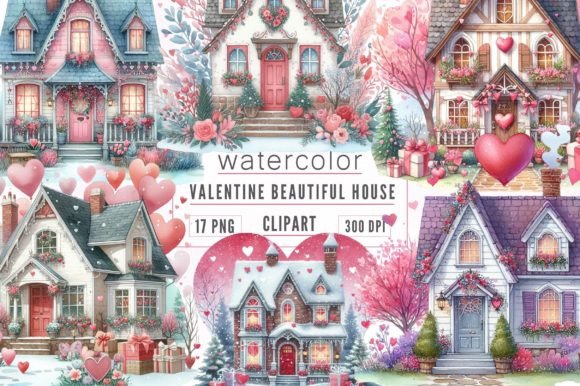
The immediate appeal of this Watercolor Valentine s Day House Clipart lies in its gentle color gradients and whimsical architectural details. However, in machine embroidery design, watercolor effects are notoriously difficult to replicate without creating bulletproof patches of thread. From a designer’s perspective, this illustration works best when treated as an applique design rather than a full-coverage fill stitch project. The organic edges of the house shape lend themselves perfectly to raw-edge or turned-edge appliqué, allowing the fabric texture to provide the visual depth that excessive satin stitch cannot achieve safely.
If you are planning to use this as a standalone embroidery file without appliqué, you must verify how the digitizer handled the gradient transitions. True watercolor effects require variable stitch lengths and strategic spacing to prevent puckering. I recommend testing this design on scrap fabric first, specifically using a light-colored cotton or linen, to see if the running stitch outlines maintain clarity against the fill areas. If the design relies heavily on dense fill stitch to mimic paint opacity, it may be too heavy for lightweight baby embroidery or delicate tea towels. In those cases, reducing the stitch density or utilizing a water-soluble topping can help preserve the drape of the finished product.
Real-World Application: The Custom Sweatshirt Test
To truly evaluate the commercial viability of this asset, I mentally placed it in a current best-selling scenario: a custom embroidered sweatshirt for a Valentine’s Day capsule collection. Sweatshirt embroidery presents unique challenges due to the stretchy fleece backing and uneven surface texture. The Watercolor Valentine s Day House Clipart fits this use case beautifully because the rustic, imperfect nature of watercolor art forgives minor registration shifts that might ruin a geometric logo.
For this specific project, I would position the house design on the left chest or centered on the back yoke. The visual personality of the illustration suggests warmth and nostalgia, making it ideal for cozy loungewear. However, because fleece has a high pile, using a heavy-weight cutaway stabilizer is non-negotiable to prevent the design from sinking into the fabric. I also advise checking thread colors against the actual sweatshirt blank before stitching; watercolor palettes often include muted pinks and reds that can disappear on heather grey or blush fabrics. High contrast between the thread and the garment base ensures the intricate rooflines and window details remain visible in product photography and wearable use.
Navigating Fabric Limitations and Hoop Constraints
While this design shines on stable knits and woven cottons, there are environments where caution is required. I would hesitate to use this Watercolor Valentine s Day House Clipart on highly textured terry cloth towels or thick canvas tote bags without modification. The fine line work typical of watercolor illustrations can get lost in the nap of terry cloth, even with topping. Similarly, if you are adapting this for cap embroidery, the curved surface and limited hoop size may distort the vertical lines of the house structure. Caps require designs specifically digitized for curvature; simply shrinking a flat illustration often results in gapping or distortion at the top and bottom edges.
Dark fabrics present another hurdle. Watercolor art is inherently translucent and light-based. Stitching this onto black or navy fabric requires either a white underlay base (which adds significant density) or accepting that the design will look fundamentally different than the digital preview. For dark garments, consider offering this as a patch design instead. Creating an embroidered patch allows you to stitch onto a controlled white twill base, preserving the intended color vibrancy, which can then be heat-sealed or sewn onto darker custom apparel.
Commercial Value for Makers and Digital Sellers
For creative entrepreneurs and small shop owners, the versatility of this illustration extends beyond physical stitching. As a digital product seller, this clipart serves dual purposes. It functions as a core component for printable mockups, allowing you to showcase potential finished products to customers before investing time in sampling. High-quality mockups build customer trust and increase conversion rates on Etsy listings. Furthermore, if you sell design assets, ensure you clearly communicate whether this file is optimized for print, embroidery, or both. Buyers need to know if they are purchasing a raster image for sublimation or a true digital embroidery file.
From a branding perspective, the Watercolor Valentine s Day House Clipart supports a cohesive aesthetic across multiple product lines. It pairs naturally with matching tea towels, nursery decor pillows, and holiday gift tags. This consistency helps establish brand recognition for handmade businesses. However, always confirm licensing terms before selling finished items or incorporating the art into commercial embroidery projects. Understanding whether your license covers physical end-products versus digital redistribution protects your business and respects the original artist’s rights.
Essential Pre-Stitch Checklist for Success
Before listing this design in your shop or stitching it for a client, run through this practical evaluation list to ensure professional results:
- Verify File Compatibility: Confirm the embroidery file format matches your machine and that the design dimensions fit your available hoop size without excessive resizing.
- Assess Stitch Density: Check if the design includes adequate underlay for your target fabric. Stretchy fabrics require more stabilization support than the default settings may provide.
- Test Color Contrast: View the design in black and white to ensure value separation exists independent of color. If it looks muddy in grayscale, it will lack definition in thread.
- Evaluate Detail Scale: Inspect tiny elements like window panes or door knobs. If they are smaller than 1mm, they may not stitch cleanly and could require simplification.
- Check Washability: If intended for baby clothes or kitchen linens, ensure the stitch type can withstand frequent laundering. Long satin stitches may snag; shorter fill stitches are safer for high-use items.
- Review Licensing: Double-check permissions for commercial use, especially if bundling this design with other assets or selling it as part of a larger personalized gift package.
Ultimately, the Watercolor Valentine s Day House Clipart is a charming asset that bridges the gap between digital art and tactile craft. Its success in your studio depends entirely on respecting the translation process from pixel to stitch. By treating it as a technical blueprint rather than just a decoration, and by validating its performance on your specific materials, you can create heirloom-quality pieces that resonate with customers seeking authentic, handmade warmth this season. Whether you are crafting a single personalized gift or launching a full Valentine’s collection, let practical testing guide your creative decisions to ensure every stitch adds value to your final product.