Puppy Love Valentine Watercolor Clipart Review
First Impressions: Translating Paint to Thread
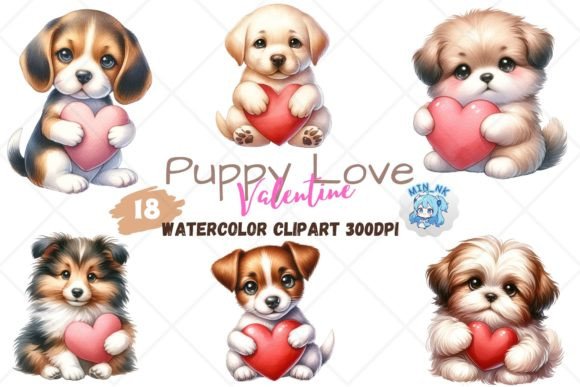
When I first opened the Puppy Love Valentine Watercolor Clipart file, my immediate thought was not just about its aesthetic charm, but about its translatability. As an embroidery designer, I look at digital illustrations differently than a graphic designer does. I am constantly calculating how a soft watercolor wash will behave when converted into thousands of physical stitches. This particular collection captures a tender, nostalgic mood that is perfect for the Valentine’s season, but the true test lies in whether that delicate artistic personality survives the digitizing process.
The visual weight of these illustrations feels balanced. The puppy motifs are expressive without being overly cluttered, which is a massive relief. In many holiday-themed clipart sets, designers overcomplicate the artwork with excessive shading or tiny details that turn into mud once stitched. Here, the shapes are distinct enough to support clean satin stitch borders and manageable fill stitch areas. The color palette suggests a need for careful thread selection; watercolor effects rely on blending, so achieving this look in embroidery requires planning your thread colors to mimic those soft gradients rather than expecting the machine to do it automatically.
Real-World Application: Stitching a Custom Sweatshirt
To truly evaluate this asset, I approached it with a specific client project in mind: a custom embroidered sweatshirt for a boutique Valentine’s capsule collection. My goal was to create a personalized gift that felt high-end and handmade, not mass-produced. I selected a mid-weight cotton fleece sweatshirt as my canvas because it offers a stable base for detailed work while maintaining the cozy vibe associated with puppy themes.
During the mockup phase, I placed the design centrally on the chest. The layout of the Puppy Love Valentine Watercolor Clipart worked beautifully here because the negative space around the subject matter allowed the design to breathe. When preparing the embroidery file, I had to consider how the watercolor texture would interact with the fleece nap. I opted for a slightly higher stitch density in the fill areas to ensure the fabric texture didn’t show through the lighter pastel threads, which can sometimes happen with watercolor-style digitizing. The result was a finished product that retained the softness of the original illustration while having the tactile durability required for apparel. For Etsy sellers or small shop owners, this balance of artistry and wearability is exactly what drives repeat customers.
Navigating Fabric Choices and Hoop Limitations
While this clipart translates well to stable knits, you must exercise caution when applying it to other substrates. Watercolor styles often involve subtle color transitions and fine lines that can be unforgiving on difficult fabrics. If you are planning a baby embroidery project using this set, be mindful of stretchy jersey knits. The design likely contains running stitches to simulate brush strokes; on unstable fabric, these can distort or tunnel even with proper stabilizer.
I would also advise against using this specific artwork for curved surfaces like caps or highly textured items like terry cloth towels unless you significantly modify the digitizing. The charm of Puppy Love Valentine Watercolor Clipart relies on visual clarity. On a cap, the curvature can compress the design, causing the delicate watercolor edges to overlap awkwardly. Similarly, on dark fabrics, the light, airy nature of watercolor illustrations can get lost. You would need to add a white underlay or increase contrast significantly, which might alter the intended soft aesthetic. Always check your hoop size constraints before committing; resizing complex watercolor designs down to fit a 4x4 hoop often destroys the detail integrity, turning beautiful art into unrecognizable blobs.
Critical Considerations for Delicate Details
- Stretchy Fabrics: Use cut-away stabilizer and consider a topping to prevent stitches from sinking into knits.
- Dark Garments: Test contrast immediately; watercolor pastels may require a background block to pop.
- Small Sizing: Avoid scaling below 60% of original size to preserve facial features and text legibility.
- Washability: Ensure fill stitches have adequate anchoring points if used on items requiring frequent laundering like tea towels.
Commercial Viability and Brand Consistency
For creative entrepreneurs and makers, the value of a digital asset extends beyond a single project. I evaluated Puppy Love Valentine Watercolor Clipart through the lens of brand consistency and commercial potential. Does this style align with current market trends? Absolutely. The "cottagecore" and soft vintage aesthetics are currently dominating the handmade product space. Using this clipart for commercial embroidery projects signals to buyers that your shop is current and attentive to detail.
However, professionalism requires due diligence. Before listing any tote bag design or embroidered patch derived from this set, verify the licensing terms. Some clipart licenses allow for physical end products but prohibit selling the digital embroidery file itself. Understanding this distinction protects your business. Furthermore, when creating printable mockups for your listings, ensure the digital preview accurately represents the stitched reality. Misleading customers by showing only the flat vector art when the actual stitch-out has significant texture can damage trust. I recommend photographing a real sample alongside the digital rendering to manage expectations regarding texture and sheen.
Designer Notes for Successful Execution
Based on my review and testing, here are practical steps to ensure success with this collection:
- Test on Scrap Fabric First: Never run a new watercolor design directly on a final garment. The interplay of thread and fabric varies wildly. Test on a scrap of the exact material you intend to use.
- Audit Stitch Density: Open the file in your editing software. Check for areas where stitch density might be too sparse for the fabric type or too dense for lightweight materials. Adjust as necessary.
- Verify Color Matching: Watercolor art uses transparency that thread cannot replicate. Create a physical thread chart comparison against the screen image to select the best solid or variegated threads.
- Check Licensing: Confirm whether the license covers the specific commercial use you intend, especially if you plan to sell finished goods at craft fairs or online.
- Mockup in Black and White: View the design in grayscale to check value contrast. If the puppy blends into the background in black and white, it will lack definition in embroidery regardless of color choice.
Final Verdict for Makers
Puppy Love Valentine Watercolor Clipart is a strong contender for seasonal collections, provided you respect the technical limitations of translating paint to thread. It excels in applications where the fabric supports detail, such as sweatshirts, pillow covers, and stable tote bags. Its emotional resonance makes it ideal for holiday embroidery and personalized gifts, but it demands a skilled hand to maintain its integrity across different media. By approaching this design with technical mindfulness rather than just artistic appreciation, you can elevate your craft business offerings and deliver products that delight customers both visually and tactically. Always remember that in embroidery, the file is merely a blueprint; your expertise in stabilization, hooping, and thread selection is what truly brings the illustration to life.