Watercolor House Sublimation: An Embroidery Review
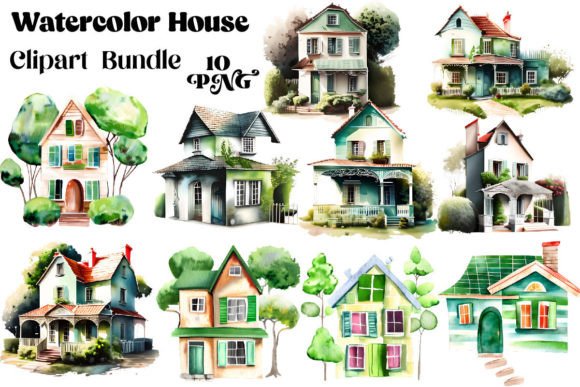
As a designer who constantly bridges the gap between digital art and tactile textiles, I approach every new asset with a critical eye. When evaluating Watercolor House Sublimation for potential adaptation into a machine embroidery design, my first thought isn't just about aesthetics; it is about translatability. This illustration carries a distinct mood—soft, nostalgic, and organic—that differs significantly from traditional vector-based clip art. For craft business owners and Etsy sellers, this specific visual style offers a unique opportunity to create products that feel hand-painted rather than mass-produced, but it requires a thoughtful approach to digitizing and application.
Translating Soft Edges to Stitch Logic
The immediate challenge and beauty of using Watercolor House Sublimation in an embroidery project lies in its lack of hard boundaries. Unlike standard line art or bold applique designs, watercolor illustrations rely on gradients, bleeding edges, and texture. When I look at this file, I am mentally mapping out how to replicate those soft transitions using thread. You cannot simply use a dense fill stitch here without losing the essence of the artwork. Instead, this design demands a combination of running stitches for subtle shading and lighter density fill stitches to mimic the transparency of watercolor paint.
For makers creating custom apparel or nursery decor, this distinction matters. A heavy, dense stitch count will make the fabric stiff and pucker, destroying the delicate vibe of the house illustration. I recommend testing a digitized version that utilizes variable stitch density. The goal is to let the fabric texture show through slightly, enhancing the handmade product feel. If you are purchasing a pre-digitized embroidery file based on this art, inspect the preview closely. Ensure the digitizer has respected the organic nature of the Illustrations category rather than forcing it into rigid satin stitch blocks that look plastic and artificial.
Real-World Application: The Custom Tote Bag Test
To truly judge the viability of Watercolor House Sublimation, I recently considered it for a line of personalized tote bags intended as realtor closing gifts. Tote bags are a staple for small shop products, but they often suffer from generic, overly bold designs. This watercolor aesthetic offers a sophisticated alternative. However, canvas tote bags have a coarse weave that can eat up fine details.
In this scenario, I had to evaluate whether the intricate roof lines and window panes would remain legible after stitching. My professional advice for this specific use case is to scale the design appropriately. Do not shrink Watercolor House Sublimation below 4x4 inches if it contains significant architectural detail. On a textured canvas, tiny elements turn into mud. I opted to pair the house graphic with simple, elegant typography in a complementary thread color. The result was a high-perceived-value item that felt bespoke. Clients responded to the warmth of the image; it didn't look like a corporate logo, which built immediate trust and emotional connection—a crucial factor for holiday embroidery or wedding gifts where sentiment drives sales.
Fabric Selection and Stabilizer Strategy
Not all substrates play nicely with watercolor-style embroidery. Because this design relies on visual softness, placing it on highly textured fabrics like terry cloth or thick fleece can be risky. The pile of the fabric may push through the stitches, obscuring the delicate color blending that defines the Watercolor House Sublimation aesthetic. For baby embroidery items or sweatshirt embroidery, smooth cotton blends, linen, or low-pile minky are superior choices.
Stabilizer selection is equally non-negotiable. When working with designs that attempt to mimic paint, you need a stable foundation to prevent registration shifts. Even a fraction of a millimeter shift can ruin the gradient effect. I always recommend a cut-away stabilizer for stretchy knits and a medium-weight tear-away for woven cottons. Always test on scrap fabric first. Check your thread colors against the actual fabric, not just the screen. Watercolor palettes often include muted tones that can disappear on cream or beige backgrounds. High contrast is necessary for clarity, even when aiming for a soft look.
Commercial Viability for Digital Sellers
For creative entrepreneurs selling digital embroidery files or printable mockups, Watercolor House Sublimation represents a versatile asset. However, you must be transparent with your customers about what this design can and cannot do. In your listing descriptions, clearly state the recommended hoop size and fabric types. Buyers appreciate honesty over hype. If the design includes tiny lettering integrated into the illustration, warn users that resizing down may require removing that text.
When creating mockups for your Etsy listings, avoid over-saturating the images. Show the design on realistic fabric textures so buyers understand the final output. A flat, bright white digital preview does not accurately represent how thread interacts with linen or cotton. Showing a finished product photo alongside the digital file builds confidence. Furthermore, always verify your licensing. Just because an illustration is categorized as "Sublimation" does not automatically grant commercial embroidery rights. Confirm whether you can sell finished physical products, the digital file itself, or both. Protecting your business starts with respecting intellectual property.
Design Limitations and Cautionary Notes
While beautiful, Watercolor House Sublimation is not a universal solution. I would advise against using this specific style for caps or curved surfaces unless the design has been specifically redigitized for hats. The curvature distorts the perspective of architectural illustrations, making the house look crooked rather than charming. Similarly, be cautious with dark fabrics. Watercolor effects typically assume a light background to simulate transparency. Stitching this on black navy requires an underlay base of white thread, which adds significant density and changes the hand-feel of the garment.
Additionally, consider the longevity of the product. Items requiring frequent hot washing, like kitchen towels or aprons, may degrade faster with complex, multi-color shading stitches compared to simple satin stitch logos. The numerous thread trims and color changes inherent in replicating watercolor art can also increase production time. Factor this into your pricing. If you are a hobbyist making a personalized gift, take the extra time. If you are a commercial embroidery shop fulfilling a bulk order, ensure the complexity aligns with your profit margins.
Final Verdict for Makers
Watercolor House Sublimation is a stunning addition to the modern maker’s toolkit, provided it is treated with technical respect. It excels in creating emotional, high-value items like nursery wall hangings, boutique apparel, and sentimental gifts. It struggles when forced onto incompatible fabrics or shrunk beyond its legibility threshold. As with any design asset, success comes from understanding the interplay between the digital source and the physical medium. Test thoroughly, stabilize correctly, and let the unique personality of this illustration elevate your handmade products above the noise of generic marketplaces. When executed well, it transforms a simple stitch-out into a piece of textile art that customers cherish.